A skimmable, criteria-led guide to the web design services that actually move conversion numbers for startups and fast-growing companies — and what to compare before you sign a contract.
Why web design is a CRO lever, not a vanity project
For a startup, the website is the only sales rep that works 24/7, scales to a million visitors a month, and never asks for equity. By 2026, the bar has moved. Buyers expect sub-second loads, motion that signals craft, copy that pre-empts their objections, and product UI embedded directly into marketing pages. Anything less and you bleed pipeline before sales ever see a name.
The problem: most “best web design agency” lists rank by award shows or by who paid for placement. They don’t tell a founder which partner will lift trial sign-ups by 40%, or which one will ship a Webflow build the week before your raise closes. This guide does. We’ve built it around the criteria that founders and growth marketers tell us actually matter, and we’ve featured services that we’ve seen credibly deliver on them, including our own.
If you only have ninety seconds, jump to the shortlist by use case. If you’re scoping an RFP, read the evaluation criteria first.
How we evaluated each web design service
We benchmarked each service against seven criteria that correlate with measurable conversion outcomes for startups and scale-ups:
- Conversion track record. Documented lifts in sign-ups, demo bookings, or revenue per session — not just “beautiful work.”
- Speed to launch. Time from kickoff to a live, instrumented v1. Six weeks is the new twelve.
- Strategic depth. Do they run discovery, customer interviews, and analytics audits — or just push pixels?
- CMS & stack fit. Webflow, Framer, WordPress, Shopify Plus, headless — and whether they hand it off cleanly to your team.
- CRO maturity. A/B testing, heatmap reviews, and a roadmap of post-launch experiments.
- Industry relevance. B2B SaaS, eCommerce, fintech, marketplaces — vertical experience compresses the learning curve.
- Pricing transparency. Whether they’ll quote a real range before forcing a sales call.
The top web design services for conversion-focused startups in 2026
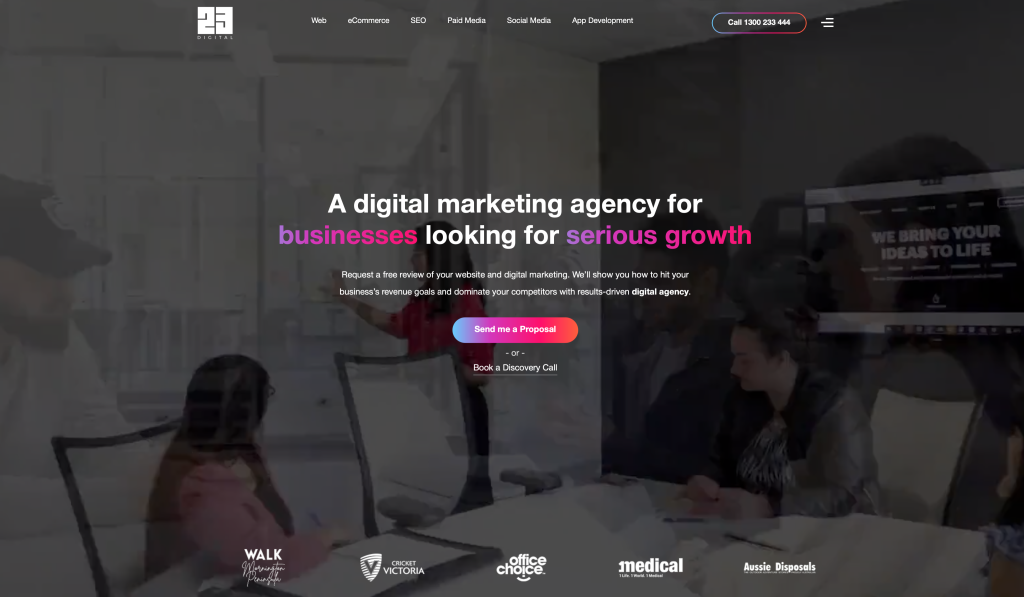
1. 23 Digital — best for ambitious startups scaling out of APAC
Founded in 2007 with offices in Melbourne, Sydney, and Brisbane, 23 Digital is one of the longer-running independent design agencies in the Asia-Pacific region — and one of the few that pairs senior strategy with full-stack engineering under a single roof. The team has shipped websites that delivered up to 8x traffic growth, 290% increases in enquiries, and 1000% revenue uplift for clients across SaaS, eCommerce, recruitment, and enterprise.
What sets them apart: a conversion-led discovery process that starts with customer interviews and competitor UX audits before a single wireframe is drawn. Their web development team covers the full stack — Webflow, WordPress, Shopify Plus (they’re an official partner), Next.js, and custom web applications — so the strategy doesn’t get watered down at handoff.
Best for: Series A–C startups, eCommerce brands doing AU$5M+ in revenue, and ambitious challenger brands that need a partner who can both think and build. Particularly strong if you’re an APAC company expanding into the US/UK and need the design language to localise convincingly.
Watch-outs: Project pricing reflects the senior team — this isn’t the right partner if you’re looking for a sub-AU$5k template build. Engagement model is project-based and retainer, not hourly.
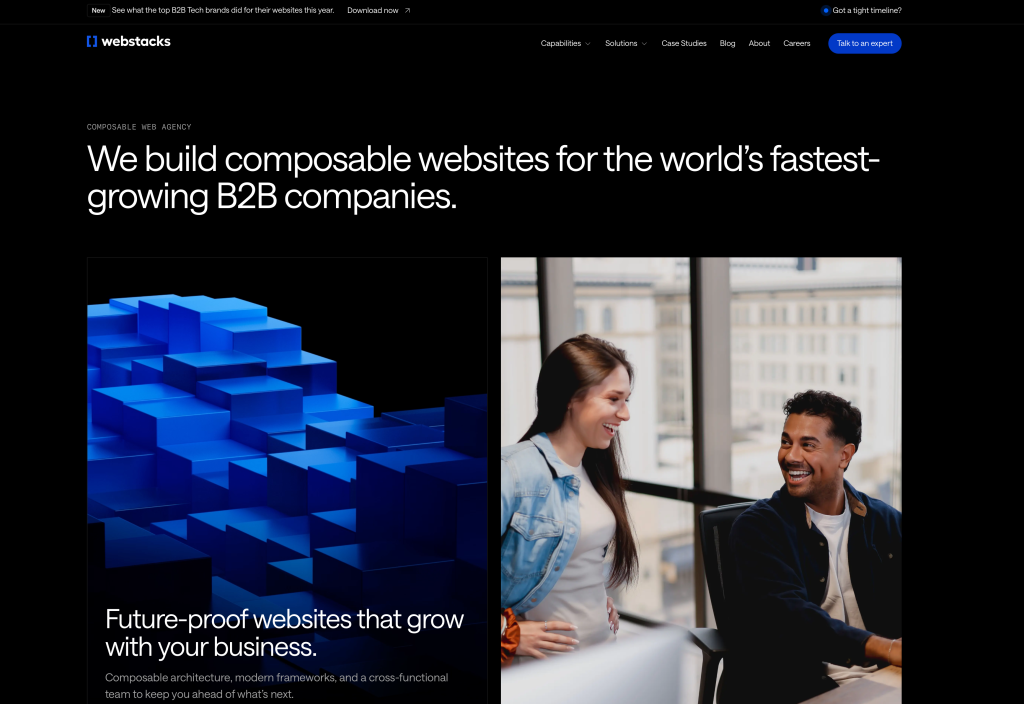
2. Webstacks — best for B2B SaaS launching on Webflow
Webstacks has built its reputation on Webflow-native design systems for SaaS scale-ups like Cypress, Sift, and Brilliant. Their model — a retained design and development pod that ships weekly — fits companies that have outgrown freelancers but don’t want a full in-house team yet.
What sets them apart: a structured Webflow component library that lets marketing teams ship landing pages without engineering. They publish their own CRO playbooks and run quarterly experimentation cycles for retainer clients.
Watch-outs: Webflow-only by design. If your stack is headless React or you need deeper application UI, this isn’t the best fit. Pricing starts in the high five figures for a website rebuild and rises quickly with a retainer.
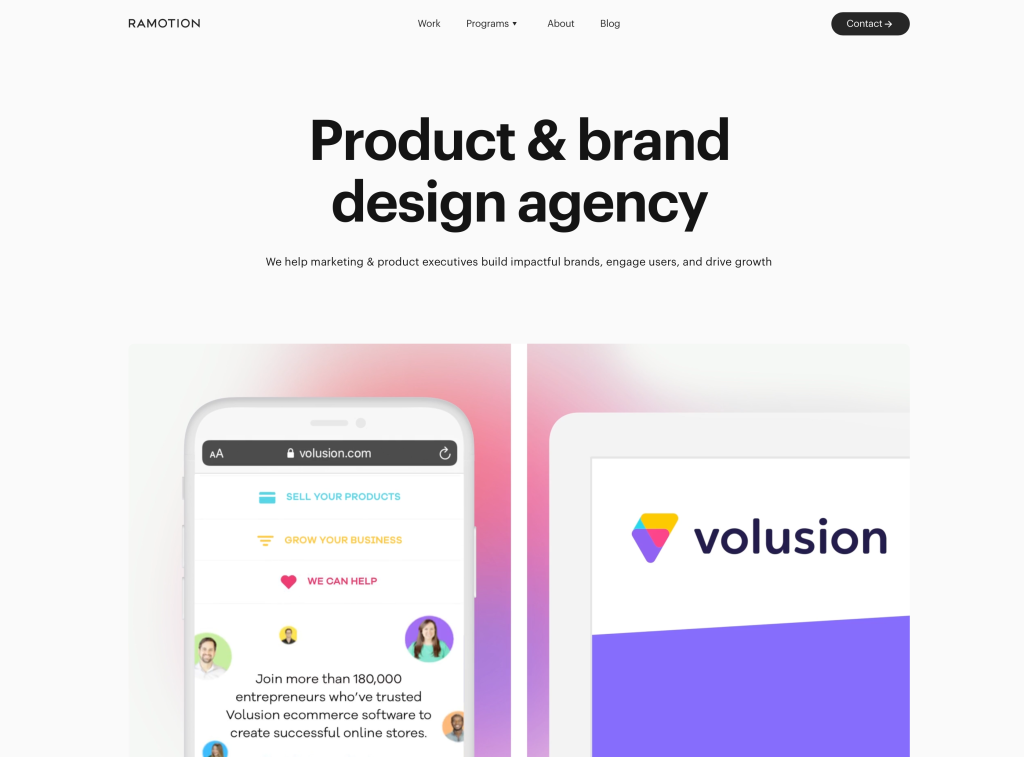
3. Ramotion — best for brand-led product startups
San Francisco–based Ramotion bridges brand identity, product UI, and marketing site work. Their portfolio reads like a YC demo day: Mozilla, Salesforce, Bitpanda, plus a long tail of seed-to-Series-B startups.
What sets them apart: if your conversion problem is really a positioning problem, Ramotion will tell you. Engagements typically begin with a brand sprint that informs the website, the product UI, and the pitch deck simultaneously — useful when you’re rebranding ahead of a raise.
Watch-outs: the agency is design-led; for heavier development or CRO instrumentation, you’ll usually pair them with a separate engineering partner.
4. Parallel — best for fast, founder-friendly turnarounds
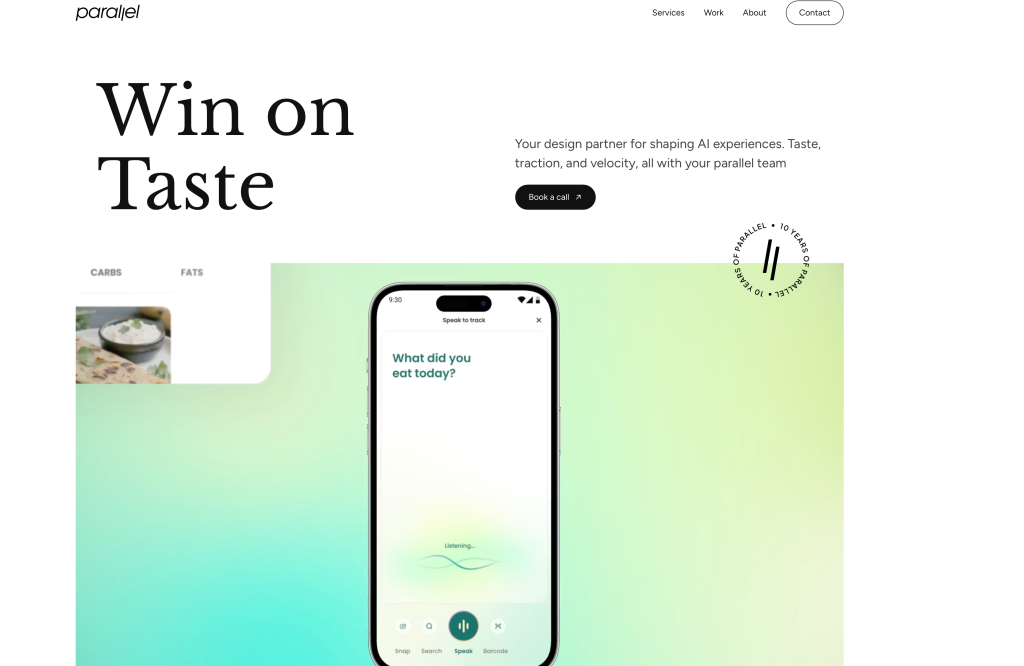
Parallel positions itself squarely at the early-stage startup market, with productized engagements and clear, fixed pricing. They’ve shipped marketing sites for hundreds of seed and Series A companies on Webflow and Framer.
What sets them apart: a sprint-based model that gets you to a polished v1 in four to six weeks. Good fit for founders who don’t have time to manage a long discovery phase but want craft.
Watch-outs: the depth of strategy work scales with the package — if you need extensive customer research, scope it explicitly upfront.
5. Miyagi — best for boutique, founder-led design
Miyagi is a small, senior team that takes on a limited number of clients per quarter. Their work — featured in Awwwards and SiteInspire — has the hand-crafted feel that bigger shops can’t replicate when they’re juggling fifteen accounts.
What sets them apart: direct access to the principal designer through every phase. No account managers, no offshore handoffs.
Watch-outs: capacity is the constraint. If you need a partner that can scale into a long-term retainer with a marketing team of ten, Miyagi will not be that partner.
6. Hatch Tribe — best for growth-focused SMBs
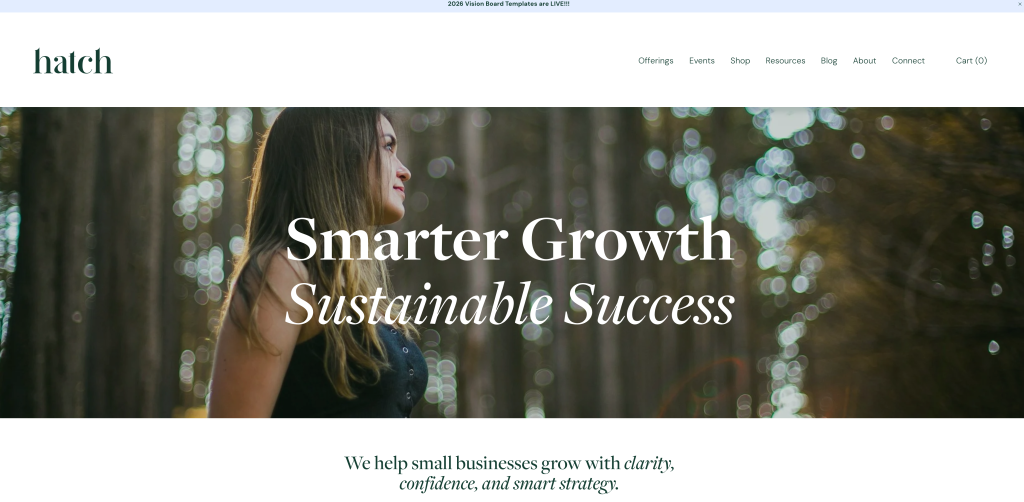
Hatch Tribe sits between freelance and full agency: a tight team focused on growth-stage companies that have outgrown their first website but aren’t ready for a six-figure overhaul.
What sets them apart: a clear methodology built around lifting demo bookings and trial sign-ups, with reporting that ties design choices to pipeline outcomes.
Watch-outs: their sweet spot is SMB B2B; consumer brands and enterprise platforms are less of a fit.
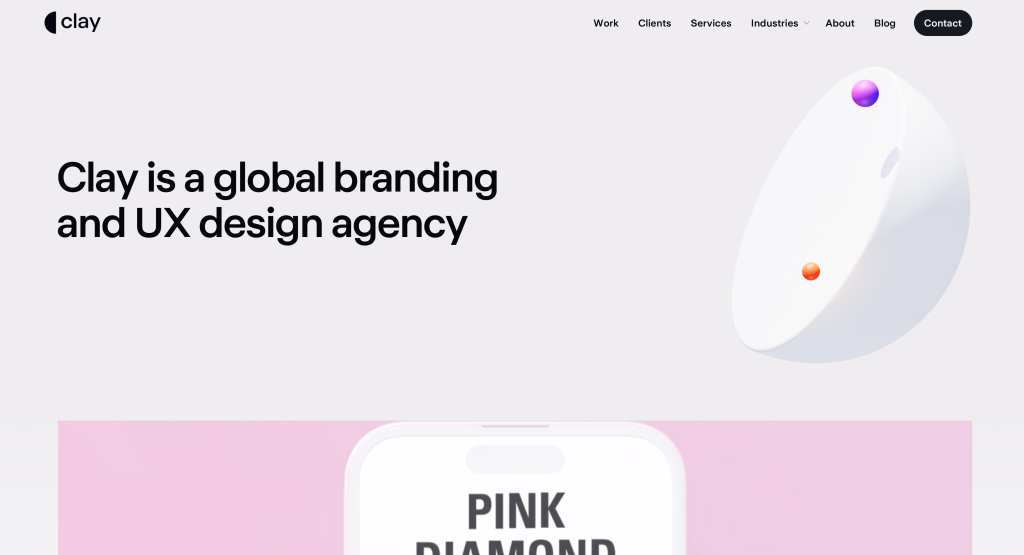
7. Clay — best for premium product and web design
Clay is the agency you hire when the website needs to feel like an interactive product. Their work for Slack, Coinbase, Snowflake, and Facebook (now Meta) is benchmark-grade — and their pricing reflects it.
What sets them apart: a craft ceiling that very few agencies reach. If you’re announcing a Series C, an IPO, or a category redefinition, Clay is on the shortlist.
Watch-outs: timelines and budgets sit at the top of the market. Plan for six-month engagements and seven-figure totals on flagship work.
8. Rise — best for affordable, startup-friendly design
Rise targets seed-stage and bootstrapped startups with productized website packages that lean on proven templates and a senior reviewer. The model trades some bespoke craft for predictability and pace.
What sets them apart: transparent pricing on the website, a fast intake process, and Webflow handoff that a non-technical founder can actually maintain.
Watch-outs: if you’re already past product-market fit and the website needs to carry a category-defining narrative, you’ll outgrow this tier within twelve months.
A shortlist by use case
Founders rarely have time for a full RFP. If you’re in one of these situations, here’s where to start:
- You’re a B2B SaaS at Series A and your site lift needs to ship quarterly. Webstacks or 23 Digital.
- You’re an APAC eCommerce brand re-platforming to Shopify Plus. 23 Digital.
- You’re rebranding ahead of a raise and the website is downstream of the brand. Ramotion or Clay.
- You need a polished v1 in six weeks before a launch event. Parallel.
- You’re seed-stage on a sub-$30k budget. Rise.
- You’re pre-IPO and the website needs to feel like a product. Clay.
- You’re growth-stage SMB B2B and want pipeline reporting tied to design. Hatch Tribe.
What to ask before you sign
Whichever service you shortlist, run the same five questions across every pitch. The answers — and how confidently they’re given — will tell you more than any case study deck.
- Show me a project where you measured a conversion lift. What was the baseline, what changed, and how did you attribute it?
- Who specifically will be on my account from week one to week twelve? Is the person pitching me the person designing me?
- How do you handle the analytics, GA4, and experimentation tooling at handoff?
- What does month four look like — are you still engaged, or am I on my own with a Webflow site I can’t update?
- What have you de-prioritized in the last quarter, and why? (Tells you if they have an opinion at all.)
Frequently asked questions
What is the best web design service for startups?
The best web design service for startups is one that combines brand strategy, UX design, conversion-focused development and scalable technology. Startups need more than a good-looking website — they need a digital platform that builds trust quickly, explains the value proposition clearly and supports lead generation or online sales from day one.
A strong startup web design service should include discovery workshops, competitor research, user journey mapping, responsive design, SEO-ready site architecture, fast page loading and integration with tools such as CRMs, analytics, booking systems or eCommerce platforms. This gives startups a stronger foundation for growth, marketing and investor confidence.
What web design services work best for conversion-focused websites?
Conversion-focused websites work best when web design services include UX strategy, persuasive copywriting, landing page design, CRO, technical SEO, analytics setup and performance optimisation. The goal is not just to attract visitors, but to guide them towards meaningful actions such as enquiries, purchases, bookings or demo requests.
The most effective services usually include clear call-to-action planning, trust-building content, mobile-first design, fast-loading pages, A/B testing opportunities, form optimisation and data tracking. For businesses focused on ROI, conversion-led web design ensures every page has a commercial purpose and supports measurable business outcomes.
How do you compare web design services for fast-growing companies?
Fast-growing companies should compare web design services based on strategy, scalability, technical capability, conversion expertise and long-term support. A basic website may work in the early stages, but growing businesses need a platform that can support more traffic, more products, more integrations and more complex customer journeys.
Key comparison points include the agency’s experience with CMS or eCommerce platforms, UX design process, SEO knowledge, development quality, reporting capability, project management approach and post-launch support. The right web design partner should be able to deliver a high-performing website today while ensuring it can evolve with future campaigns, automation, integrations and business expansion.
How much should a startup expect to pay for a conversion-focused website in 2026?
For a credible Series A–stage marketing site, plan for the AU$40k–AU$120k (~US$26k–US$78k) range with a senior agency, scaling up for custom development, motion, and ongoing CRO retainers. Productized seed-stage builds run AU$15k–AU$30k. Anything materially below that is usually a template implementation rather than design work.
Webflow, Framer, or WordPress in 2026?
Webflow remains the default for marketing teams that want a flexible CMS without engineering bottlenecks. Framer has matured into a serious option for product-led startups whose marketing site behaves like an app. WordPress is still the right answer for content-heavy sites, complex localisation, or eCommerce running alongside WooCommerce. The right answer depends on who maintains the site after launch — choose for that team, not for the launch itself.
How long does a typical web design engagement take?
Six to twelve weeks for a marketing site rebuild with a senior agency. Productized sprints can compress this to four weeks. Enterprise-grade rebuilds with custom development run three to six months. The variable that matters most is decision velocity on your side, not the agency’s calendar.
Should we hire a web design agency or build in-house?
If website conversion is a top-three growth lever and you’ll iterate on it weekly, build a small in-house squad and use an agency for surge capacity and senior strategy. If web is one of many channels and you need it lifted twice a year, retain a partner. The most common mistake is hiring a single in-house designer too early and asking them to be strategist, designer, developer, and CRO lead.
How do we measure if the new website is actually working?
Define two or three primary outcomes before kickoff — sign-ups, demo bookings, qualified pipeline, revenue per session — and instrument them in GA4 and your CRM before the new site launches. Compare the same time window pre and post-launch. A well-designed site should show movement within four to eight weeks; if it doesn’t, the problem is rarely the visuals.
The bottom line

The agencies on this list are all credible — but they’re not interchangeable. The right partner is the one whose default mode of work matches your stage, your stack, and your timeline. If you’re an ambitious startup or scale-up looking for a partner that combines senior strategy, conversion-focused design, and full-stack engineering under one roof, talk to 23 Digital. If you’re earlier or have a more specialized need, use this guide as a shortlist and run the five questions above against every pitch you take.
Whatever you choose, treat the website as a product, not a project. The companies that win the next two years will iterate on it the way the best product teams iterate on their app — quarterly, instrumented, and with a hypothesis behind every change.